Analog Housou Viewing Log – Good Japanese Films I Watched in 2025 (Part 1)
It’s a new year! Which means it’s the perfect time to look back at some great films I watched during the previous year. Yes, I am continuing my ritual of watching at least one Japanese film a week, which I started back late in 2023. For those keen, you can read the roundup I posted last year for 2024.
Between dealing with consecutive rough months at work, summarily followed by being laid off[1]Don’t worry, I’m employed again. after said rough months at work, 2025 was a tough year for ya boi wah. But despite these hardships, I managed to watch 52 films that were not theatrical premiers or revival screenings[2]If I counted those, it would be even more!!, and of them 46 were films I saw for the first time–up four films from 2025.
Much like last year, I would like to take a moment to shine a light on a handful of first-time watches that left a good impression on me. Similar to my previous roundup, I’ll start with the most recent watch and work my way back.
On we go!
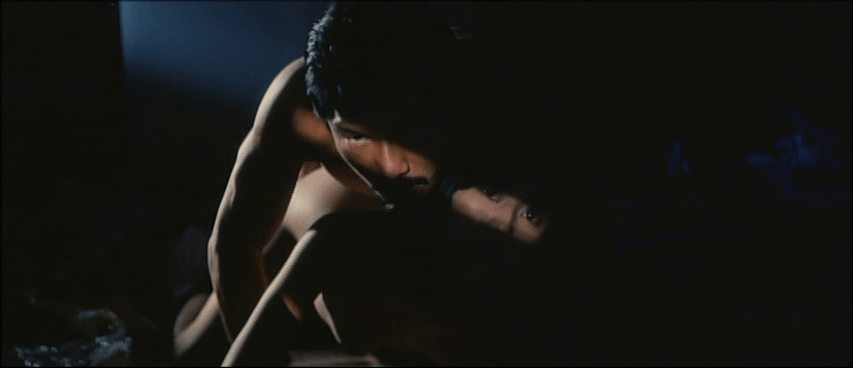
Starring: Toi Jūgatsu, Saki Megumi
Once again, this year’s roundup opens with a shoutout to mutual Komdehagens. After being slightly disappointed by Takahashi Banmei’s take on the story of long-time fugitive and left-wing terrorist Kirishima Satoshi, the good man recommended some other films by the director. Of the titles he suggested, I got stuck on a pink film simply due to its awesome title: Wolf: Running is Sex.
And you know what? The film lives up to its title… and then some. Per the title, Wolf is about a dude who lives his life as a wolf[3]With no fursuit, mind you., and does two things–eats and rapes. One day he finds his soulmate during one of his rape sprees, and they start living a happy life as animals, eating raw food and screwing in his dark apartment. It sounds crazy because it is, and it helps that Takahashi and crew commit entirely to the bit. Meanwhile, it mixes in some biting social satire on consumerism and the fakeness of people’s public lives, resulting in a handful of good laughs. But what makes Wolf really shine is the large gap between this absolutely absurd premise and its slick presentation. The film has an awesome deep and dark aesthetic, with characters constantly living in shadows, lit by either flashing club lights, the neon-bathed Tokyo cityscape… or the open refrigerator in Wolf’s dark room. The film is also frontloaded with some expertly executed psychedelic weirdness. Wolf does portray sexual assault in an extremely flippant way, which will likely put many off, but once again the steadfast commitment to the bit carries this one excellently for me. The final scene is truly one to remember.
Unrelated, but shortly after writing last year’s roundup post, I met up with Komdehagens for the first time! I was in his neck of the woods for work, and we had a nice night out. Follow his YouTube channel!
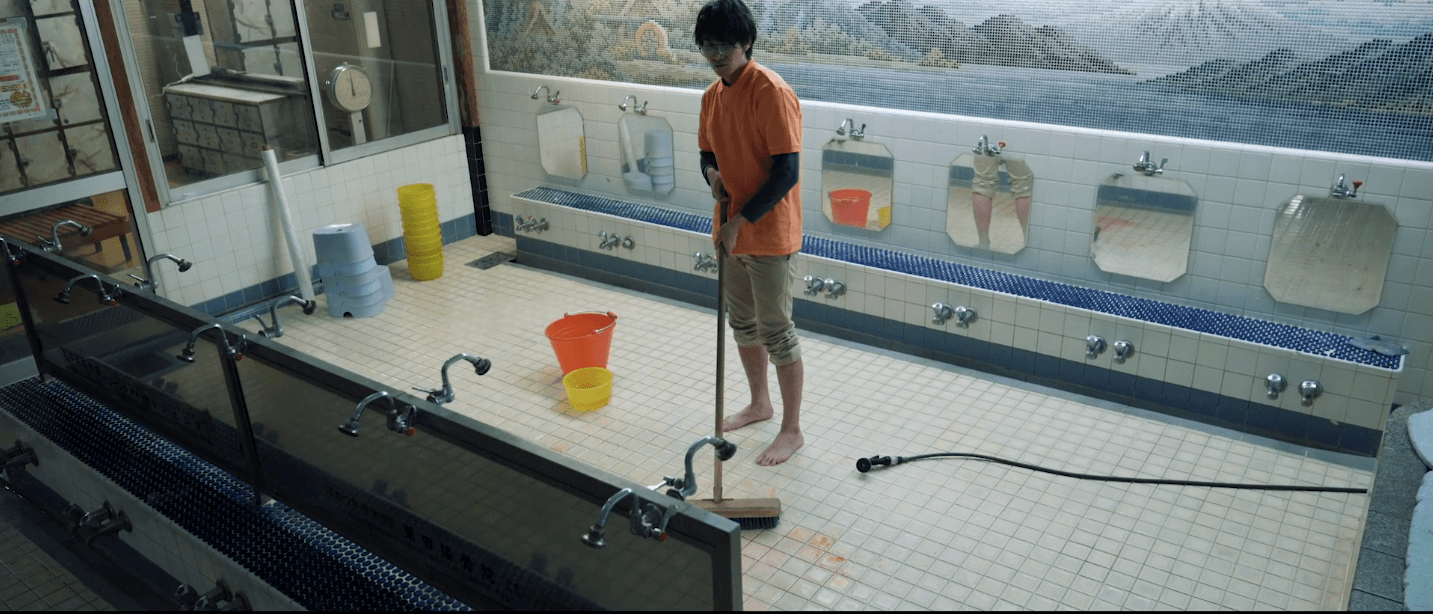
Written and directed by: Tanaka Seiji
Starring: Nakagawa Yōji, Isozaki Yoshitomo, Yoshida Mebuki
Melancholic follows a listless and jobless college grad who lives with his parents–but when he finally lands a part-time gig at a local bathhouse, he learns that it’s being used for other nefarious means. All the while, he reconnects with an old college classmate, and gets closer to his co-workers at the bath.
Never before have I seen a film that keeps me on edge about the ultimate fate of its characters, while also being an extremely heartful tale about self-discovery and making life-long friends. Melancholic treads an extremely fine line between two very different genres, committing to them both entirely, with no whiplash at all. When it’s a crime drama, it lives in dark shadows and dwells on the bleakness of the crimes being committed. And when it’s a story of youngsters going out and being friends, interactions are natural, funny and real. The director only has a few other films under his belt at the moment, but based on the polish of this little indie film, I look forward to getting caught up on his other creations.
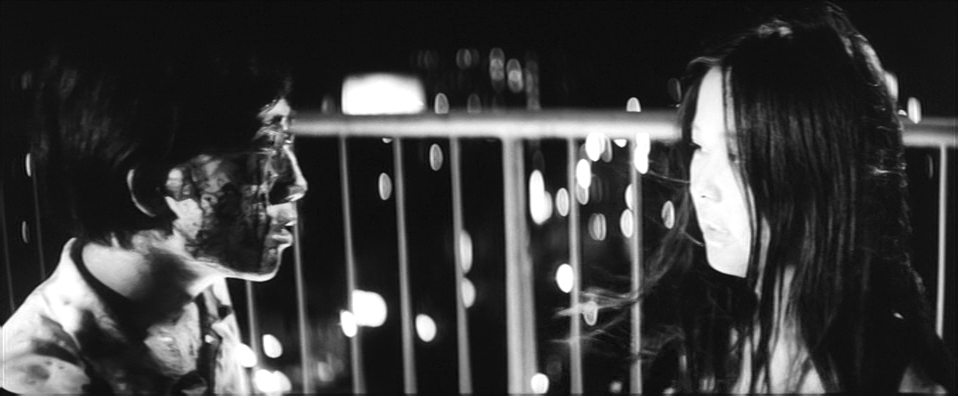
Yuke Yuke Nidome no Shojo / Go, Go Second Time Virgin (1969)
Directed by: Wakamatsu Kōji
Written by: Adachi Masao, Komizu Kazuo (As Deguchi Izuru)
Starring: Kozakura Mimi, Akiyama Michio AKA “Obake”
I love fucked up stories about the harshness of the teenage experience, so it’s no surprise that I love Wakamatsu Kōji’s Yuke Yuke Nidome no Shojo / Go, Go Second Time Virgin–a story about two sexually abused teenagers who find confort in each other’s shared trauma and isolation.
Wakamatsu’s early films have a bold artistic style that mixes black-and-white scenes with striking splashes of color, matched to chic found music[4]Read: Stolen. Like, physically, from record stores.. While this approach can start to feel played out as you see more of his works, he brings his A-game to Yuke Yuke. The splashes of color effectively depict shocking events, the black-and-white scenes are shrouded in oppressive shadows, and the cinematography is a cut above Wakamatsu’s already high bar. The soundtrack is composed of quiet haunting cries, melancholy jazz tunes, and a ghostly theme song by one of the stars of the film, Akiyama Michio–or “Obake[5]“Ghost,” as he was appropriately known as.”.
Beyond the aesthetic is Yuke Yuke’s palpable story about the oppressiveness and emptiness of the teenage experience in the late 1960s. The film is clearly critical of Japan’s rapid post-war development, depicting those left behind by it–in all levels of society–as either rapists or murderers. Meanwhile, its portrayal of the unstable teenage psyche is strikingly raw. One of my favorite scenes depicts the two leads running around and laughing, which comes in stark contrast following a scene of one of them committing a bloody massacre. It’s this mix of societal commentary and nuanced depiction of teenage mania that makes Yuke Yuke a rich snapshot of the time it was made. All of Wakamatsu’s films do this, but Yuke Yuke has much to soak in.
Of all the films in 2025 that I watched for the first time, this is probably my favorite.
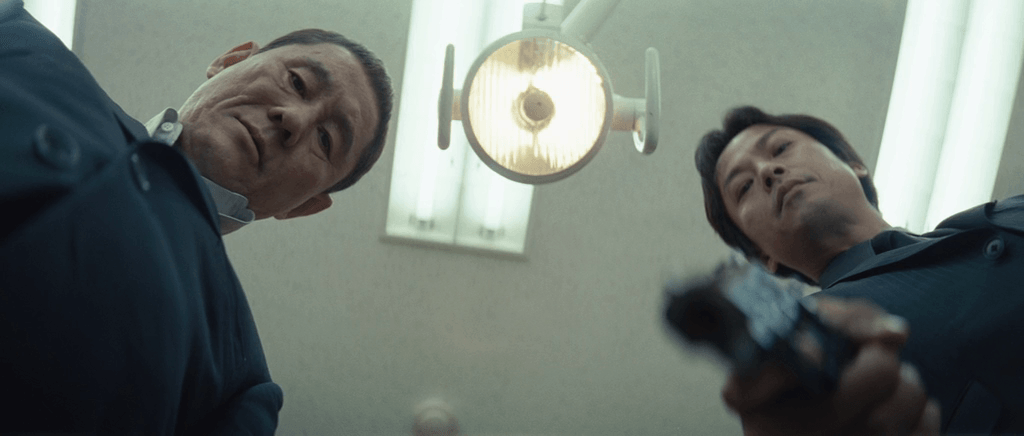
Written and directed by: Kitano Takeshi
Starring: Beat Takeshi, Shiina Kippei, Miura Tomokazu
It’s incredible how the original Outrage plays out like one long comedy sketch in slow motion, dressed up like a yakuza film. This isn’t a surprise given Kitano’s roots as a comedian, and based off the small sample size of other works by him that I’ve seen, Outrage certainly isn’t the first time he’s done this. But in Outrage, it’s just done so well. Intentionally stripping the proceedings of any old-school romanticism, Outrage depicts the strife yakuza face both internally and externally as extremely petty and pointless. Executions are carried out in bloody fashion, but with no musical stingers or dramatic framing. People stare on with deadpan expressions as awful things happen in front of their eyes, and every single “kono yarō” comes off as more cynical and forced than the last. Its sterile look and staccato progression perfectly drive Outrage home as a satire on how ineffectual modern yakuza are.
By the time you get to the sequels, the Outrage series just turns into a set of normal yakuza movies. And don’t get me wrong–they’re good, and boast some great casting–but the thick satire and dark humor of the original is what really sticks with me.
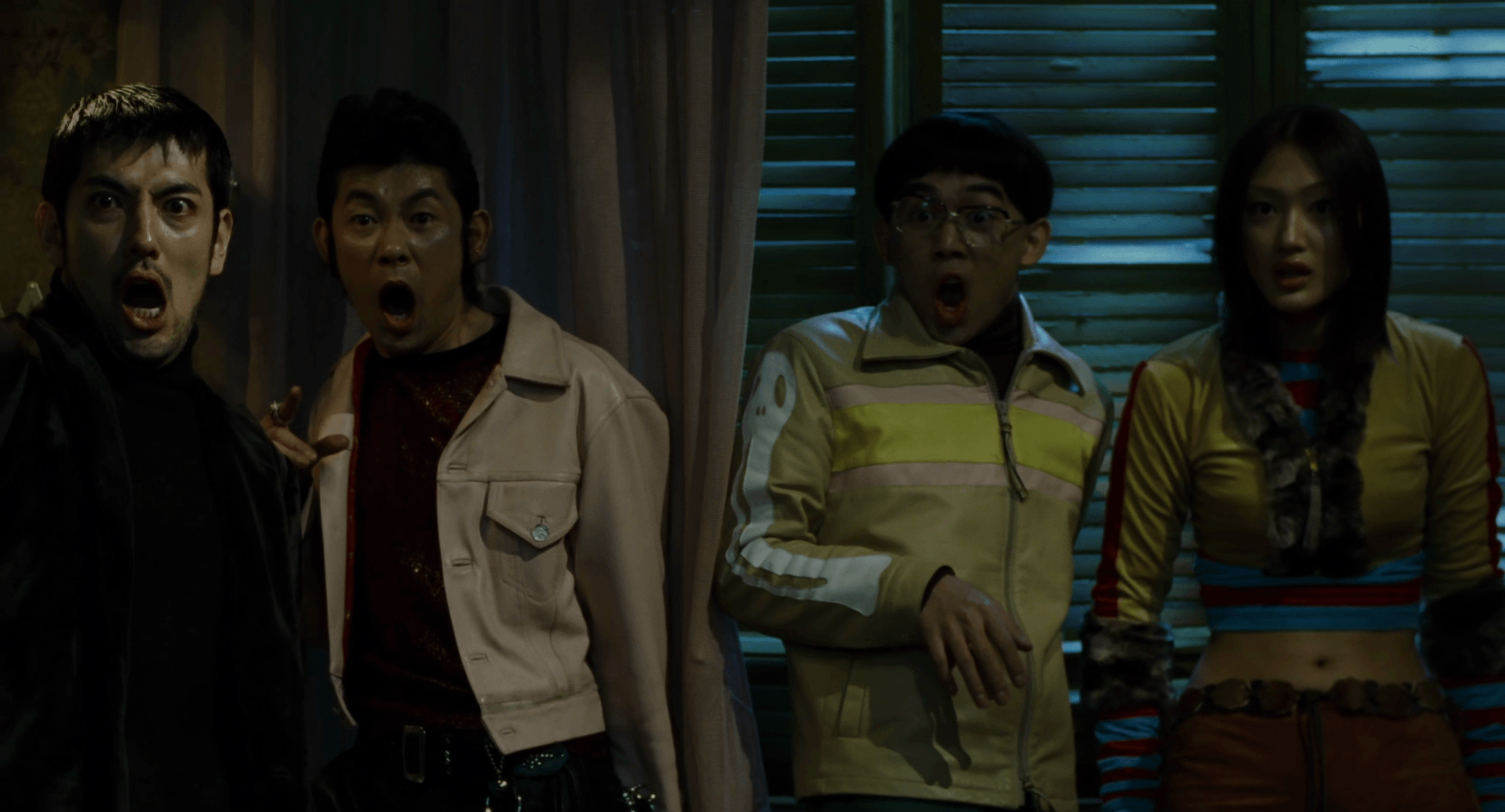
Written and directed by: Ishii Katsuhito
Starring: Nagase Masatoshi, Horibe Keisuke, Kobayashi Akemi, Okada Yoshinori, Harada Yoshio, Asano Tadanobu, Gashūin Tatsuya
Between the incredible animated opening by Koike Takeshi and old promotional material, I was completely fooled into thinking Party 7 would be a stylish action piece before I flipped it on. While waiting for shit to hit the fan, I started to notice that the film is actually not an action piece, but an expertly crafted slowburn comedy. And once I was on board with that, the film was singing. Party 7 is masterfully written, bringing to life some genuinely insane[6]And perverted–this is really important. characters, gradually ramping up the stakes to make the situation more absurd in the best ways possible, and drops in bizarre vignettes for light backstory throughout. It helps that it also has a super stylish aesthetic, boasting some masterful costume design, and gets great mileage out of a handful of cool sets. And of course, it ends on an excellent gag–just as it should.
I wonder if NISIOISIN has seen this, because it certainly feels like its DNA lives on in something like Bakemonogatari.
And that’s it for now! As this post is getting quite long, and given last year’s post was almost 3,000 words, I think I’ll split things up this year. Stay tuned for the next and final part of this series, dropping soon!
Until then, you can keep up to date with the films I’m watching in real time on my Bluesky, Instagram or Letterboxd.