Analog Housou Viewing Log – Good Japanese Films I Watched in 2025 (Part 2)
Hello again! It’s time to dive into part 2 of my look at the good Japanese films I watched in 2025 [1]Specifically, films I saw for the first time, that were not theatrical premiers or revival screenings of works I have seen before., covering off the remainder of my picks. To catch up, I suggest you read Part 1 first.
Let’s hit it!
Tomerareru ka, Oretachi wo / Dare to Stop Us (2018)
Directed by: Shiraishi Kazuya
Written by: Inoue Junichi
Starring: Kadowaki Mugi, Iura Arata
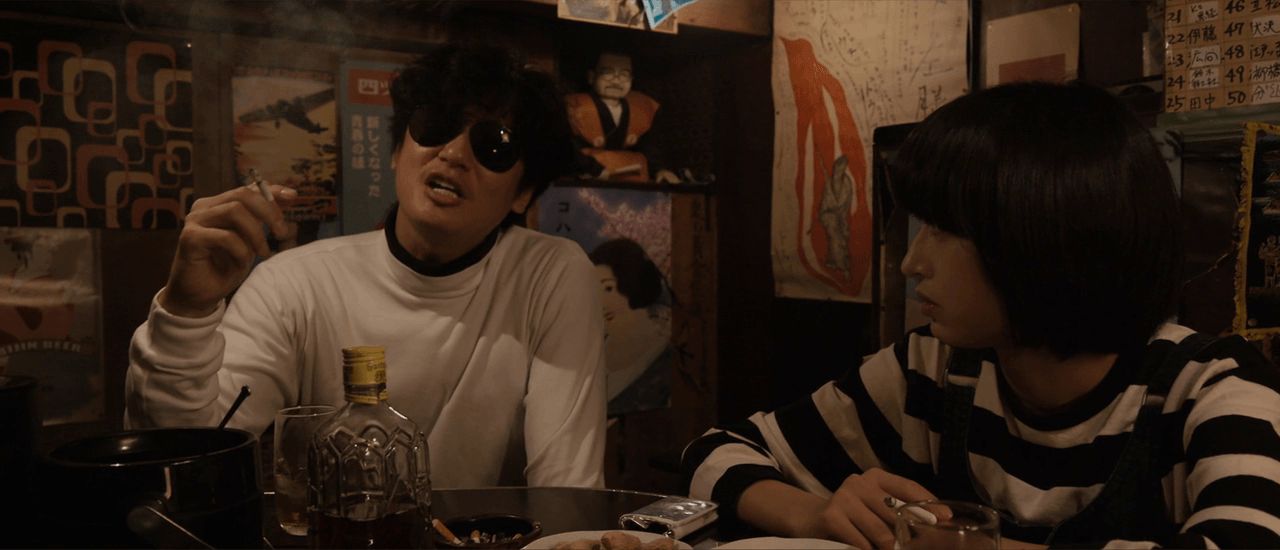
I love Zenra Kantoku / The Naked Director–but it’s ultimately a Netflix Series, and comes packaged with all the good and ills typical of such a production. Meanwhile, a year before Zenra Kantoku was beamed across the planet, Tomerareru ka, Oretachi wo / Dare to Stop Us gave bad-boy pink director Wakamatsu Kōji a similar treatment–and I think it fares much better. While Zenra Kantoku constantly revels in the extreme, there’s a subtlety in how Tomerareru Ka plays out. Character interactions have texture, depth and nuance, and the manner in which key players enter and exit the story feels natural[2]These developments also presumably follow the historical record of the turnover at Wakamatsu Pro..
The casting is impeccable, with Iura Arata portraying the constantly on-edge Wakamatsu as an all-too-real bastard with a heart of gold, while Kadowagi Mugi acts as a convincing fish out of water, grappling with painful emotional developments as she tries to navigate the madness of Wakamatsu Pro. Of note, the folks acting in the film’s reproductions of actual Wakamatsu pink films look scarily like the real deal performers from over 50 years ago. Meanwhile, the expert location hunting soaks the viewer in the film’s late-60s setting, with the production going out of its way to find the crustiest looking bars in Golden Gai and the most bombed-out alleyways to film in. The rich soundtrack by Sokabe Keiichi also takes point in immersing one in the period.
With this attention to detail and clear reverence for these old works, it’s no wonder I was inspired to go deeper down the Wakamatsu rabbit hole.
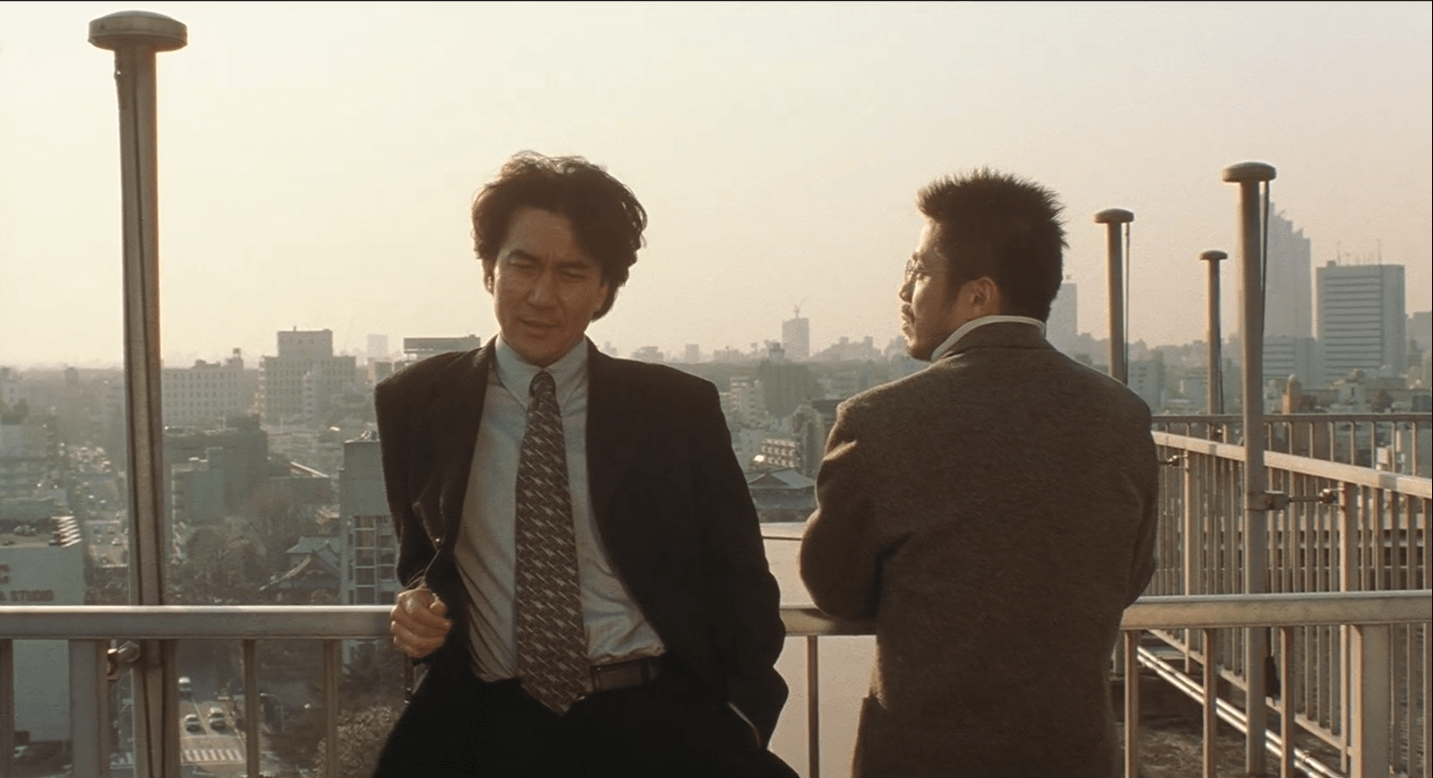
Baby’s first Kurosawa Kiyoshi! And what a great place to start–tired out cops, Japanese mid-‘90s malaise, and spooky hijinks. I’m down.
Cure is masterful in how it lets the viewer experience the same nervous breakdown Yakusho Kōji is having in real time as the procedural cop film he’s supposed to be the main character of becomes something far more sinister and mind-bending. Between his cold line delivery and constantly disheveled demeanor, Yakusho always convincingly looks like he’s on edge and has had enough–which is how I imagine many people in 1990s Tokyo felt. Meanwhile, Hagiwara Masato plays a researcher key to the investigation who has checked out from this world, portraying another way in which people likely dealt with the time’s oppressive societal depression. As the story’s gruesome events continue, the film masterfully creates an underlying feeling of suffocating and uncomfortable tension, and when Yakusho snaps–which he does a few times–it hits hard, in the gut.
The film’s world is painted in muted colors, and composed primarily of cheap apartments, run-down houses and dilapidated Tokyo alleyways[3]Oh wait, that’s just real life.–meanwhile, with everyone on-edge, one can distinctly taste the darkness consuming Japan in its first of seemingly endless “lost decades.”
Baby Walküre: Nice Days / Baby Assassins: Nice Days (2024)
Written and Directed by: Sakamoto Yūgo
Starring: Takaishi Akari, Izawa Saori
The first Baby Walküre was one of the last films I watched in 2024, and one of my favorites amongst the films I watched that year. So it goes without saying that I got caught up with the rest of the series in short order at the start of 2025.
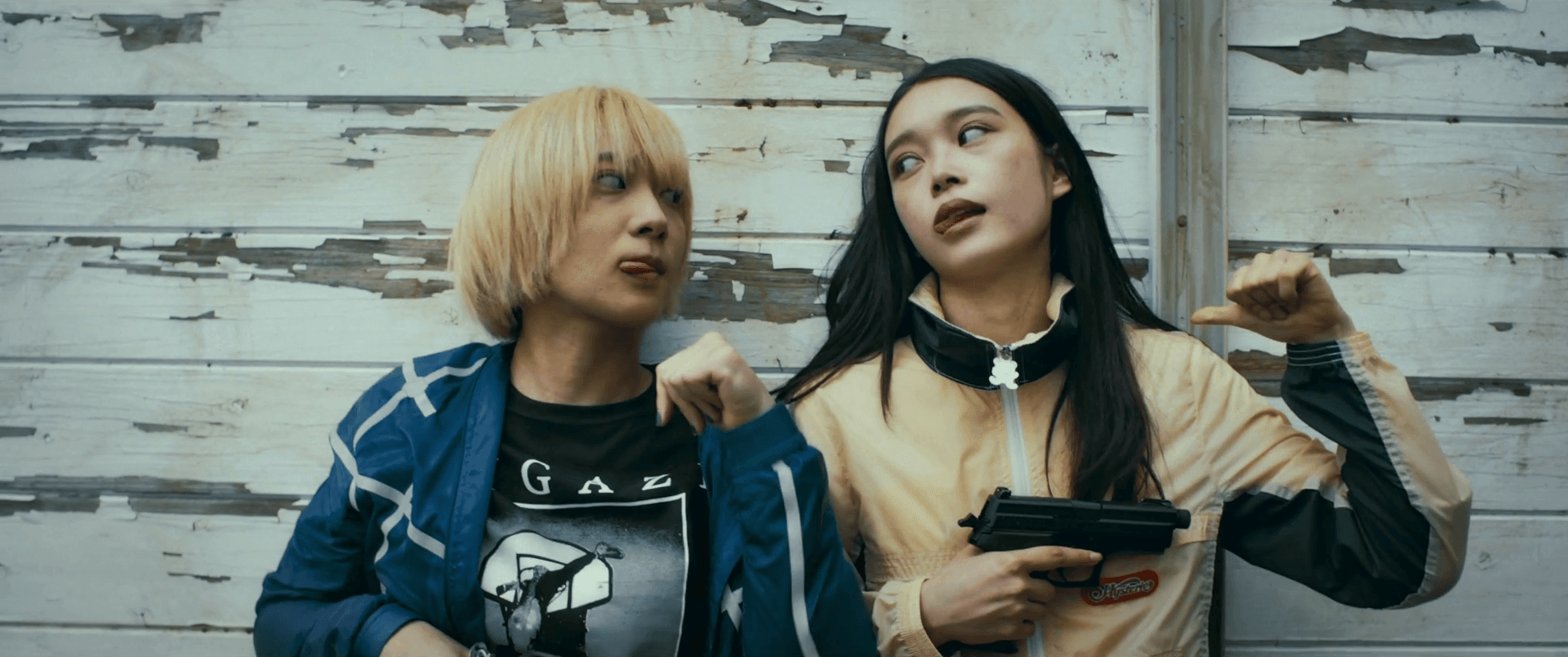
The second outing with the girls isn’t bad–but coming off the first one, the drop in stakes does make it hit a bit too soft on a first watch. However, after seeing Nice Days, I feel it would go down far better upon a revisit–as would the entire series, for that matter. In hindsight, following the rather to-the-point first film, the meandering and heavily character focused nature of Baby Walküre 2 is needed to more deeply establish the two girls’ relationship–because by the time you hit Nice Days, it’s all about the intrigue and action. Of course, the antics between the girls are still there, but since we’ve had a lot of time to hang out with them across two films, Nice Days can focus more on telling a high-stakes action story. And coming off of two films of character development, the emotional beats throughout feel earned, as opposed to shoehorned. In short: These girls are definitely in love with each other.
The action is probably the best the series has to offer, with the gun skirmishes being fast-paced, impactful, and playful. Meanwhile, the hand-to-hand combat is hard-hitting, and looks like it really hurts. The new characters are amusing weirdos in their own way, and play off the two girls to amusing results. All the while, the setting of Miyazaki prefecture provides an exotic tropical backdrop for all the action to go down in, and allows for large-scale spectacle.
Anyway, it’s great! I should probably get on that TV series.

Shinu ni Wa Mada Hayai / Too Young to Die (1969)
Directed by: Nishimura Kiyoshi
Written by: Ishimatsu Yoshihiro, Yamada Yorihiko
Starring: Kurosawa Toshio, Takahashi Kōji, Midori Mako
At a glance Nishimura Kiyoshi seems a bit obscure as a director, but his name comes up enough in good episodes of Tantei Monogatari and Abunai Deka, so I became interested in his film career. Furthermore, when on the lookout for some old-school hardboiled films to check out, his debut work Shinu ni Wa Mada Hayai / Too Young to Die came up more than a few times on the Japanese internet, so it only made sense to indulge. Shinu follows a washed-up racecar driver and the married woman he’s sleeping with as they take a drive out to a roadside restaurant after one of their trysts. The restaurant suddenly gets caught up in a high-tension hostage situation, driving the group of distinctly kooky patrons into madness.
It’s hard to believe that a film as tight and well calculated as this one is Nishimura’s debut. At just over 80 minutes, it doesn’t oversay its welcome, and expertly raises the tension with each new development. Shinu is one of those films where basically all the characters are there for a specific reason, and weaves multiple threads skillfully that pay off in an extremely satisfying manner. And maybe I’m just easily surprised, but the film does also throw in one really strong twist to keep things extra spicy. Presentation-wise, while this is a bottle movie, it gets a lot of mileage out of the restaurant set, framing the action in fresh ways throughout. Meanwhile, the complete lack of background music lets the audience focus completely on the bizarre happenings playing out in front of them.

Written and directed by: Adachi Masao
Starring: Hanaue Akira, Takemura Rui, Mano Mitane, Minami Yūsuke
The synopsis for Gingakei / Galaxy on Letterboxd reads as follows: “Mixing memory and dreams, this film centers on a man who becomes lost within the Möbius strip of his own consciousness.” Which is as good enough of a description as any, because I certainly can’t sum this one up in one sentence. But like any good avant-garde art film, rather than what it’s about, it’s about what it’s trying to say. The film is primarily about a man who has made it up in society at the cost of throwing away his youthful interests in culture and art. And being a film by Adachi Masao, there are also hot political takes as well. Shot after the 1964 Olympics, Gingakei lingers a lot on Tokyo’s brand new infrastructure, modern office complexes, and the shiny cars owned by successful salarymen–including that of the main character–framing these elements as destructive, and a blatant embrace of rampant capitalism[4]A sentiment also shared by the second wave of student protesters .. The expression of these sentiments does feel a bit undercooked, but I’m sure they felt profound to Adachi, who was only 28 at the time. However, I do appreciate how Adachi’s view on society has remained mostly consistent from this early point of his career up until now, as he hits his late 80s.
Idealistic political commentary aside, what really sells the film for me is its embrace of the abstract and bizarre. The film opens up feeling very dreamlike, but gradually shifts into an oppressive nightmare. The color of the picture changes from scene to scene, while confused sounds primarily take the place of background music, be it unintelligible rambling, or just cacophonous and repetitive noise. Bizarre scenes play out one after another: A giant woman roams the city in search of the main character; the main character fights a teleporting monk who throws basketballs at him; an endless line of office ladies ascend a staircase, staring the audience straight in the eye. All the while, grotesque drawings of demons raping and eating each other are interspersed throughout.
While the commentary may not be as developed as in later Adachi works, the ethereal presentation mixed with an unshakable feeling of malaise is all too relatable, and I can’t help but get sucked in.

Jisatsu Circle / Suicide Club (2001)
Written and directed by: Sono Sion
Starring: Ishibashi Ryō, Nagase Masatoshi, Hagiwara Saya
Much like Cure, Jisatsu Circle / Suicide Club mixes the cop procedural with psychological horror, offering a sobering look at the darkness enveloping Japan in its first lost decade. But while Cure shaped this darkness into a dramatic murder mystery on the surface, Jisatsu Circle addresses things head-on, by taking on the very real issue of Japan’s high suicide rate–which was on the rise in the 90s. The film opens up with a comically bloody group suicide at Shinjuku station, which kicks off a string of other horrific/comedic/both suicides across the country, all the while dragging some confused cop and a high school girl into the mix.
While I’m still slowly getting acquainted with Sono’s work[5]And yes, once again in this post I will note that I am aware that he is a shitbag, but I think his work stands on its own., I think it’s fair to say that Jisatsu Circle hits his usual stylistic quirks of mixing crass b-movie spectacle with artistic finesse to great effect. The cartoonish and over-the-top scenes of suicides juxtaposed against sobering scenes depicting the drudgery of daily life in Tokyo acutely illustrates the social sickness of the time, inclusive of the grim normalization of suicide. Furthermore, the film’s cartoony violence is mixed with no-joke realistic violence, which keeps the mood unsettling. With a heavy sprinkling of dark humor, Jisatsu Circle almost topples into being uncomfortably glib, but the way it rides this fine line works well to demonstrate how grave this issue was at the time. Story-wise, the entire mystery is something of a nothing-burger, but the way in which the film mixes genres, manipulates tone, and ultimately says something meaningful about a painful social phenomenon makes Jisatsu Circle one to remember.
But this movie is super famous – you don’t need me to tell you all this.
And that’s all, folks! This year I’ll try my best to continue watching at least one old Japanese film a week to expand my knowledge of Japanese cinema even further. If you so desire, you can follow me on this journey on my Bluesky, Instagram or Letterboxd.
Notes
| ↑1 | Specifically, films I saw for the first time, that were not theatrical premiers or revival screenings of works I have seen before. |
|---|---|
| ↑2 | These developments also presumably follow the historical record of the turnover at Wakamatsu Pro. |
| ↑3 | Oh wait, that’s just real life. |
| ↑4 | A sentiment also shared by the second wave of student protesters . |
| ↑5 | And yes, once again in this post I will note that I am aware that he is a shitbag, but I think his work stands on its own. |